Pickleball lessons in plain English
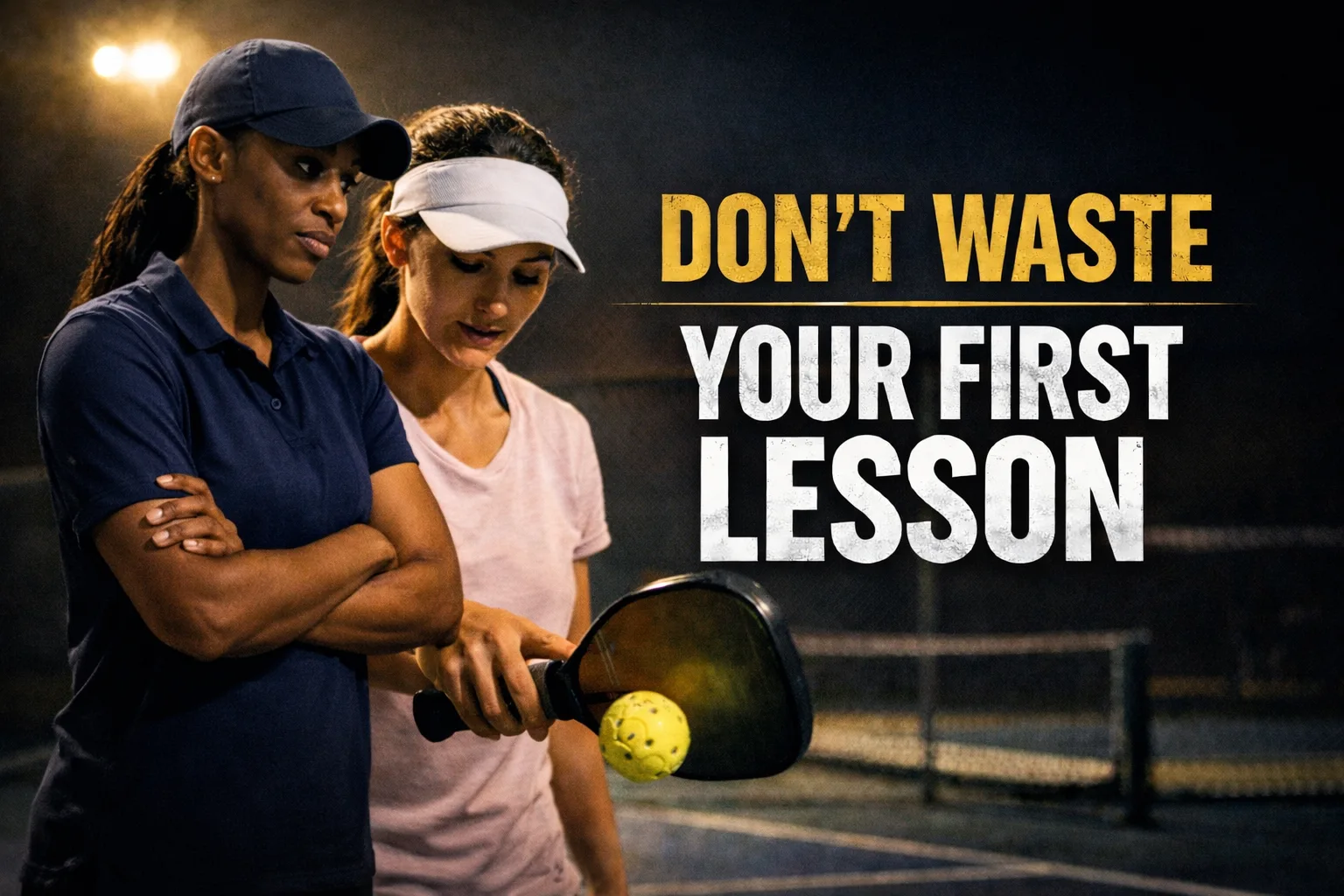
A pickleball lesson is the fastest way to move from guessing to understanding. Instead of piecing the game together from random videos or trial and error, you get a coach, a court, and a sequence that teaches the basics in the right order.
The best lesson pages all point toward the same idea: players want clear instruction, a manageable next step, and enough practice to feel the game come together. That is true whether the lesson is private, grouped with other beginners, part of a clinic, or offered through a club calendar.
If you are new, the goal is not to look polished on day one. The goal is to learn the parts that make pickleball feel simple:
- how to hold the paddle
- where to stand
- how to serve and return
- how to stay out of trouble at the kitchen line
- how to keep the ball in play long enough to rally
That is enough to make a first lesson worth it.
What a pickleball lesson covers
Most beginner lessons start with the same core skills. A coach will usually walk you through grip, ready position, basic footwork, serving, returning, dinking, and simple court spacing. Some lessons also include a few rules that beginners often miss, especially around the non-volley zone and double-bounce rule.
The order matters. A good lesson does not bury you in advanced strategy before you can hit a controlled return. It starts with the shots you need immediately, then layers on movement and decision-making once the basics feel stable.
That is also why lessons work better than random advice. Pickleball is easy to start and harder to refine. A teacher can show you the difference between a shot that looks fine and one that actually helps you score.
Private vs group lessons
Private and group lessons solve different problems.
Private lessons are the right choice when you want direct feedback on your own game. If your serve is inconsistent, your dink floats too high, or you keep backing up when you should move forward, a coach can isolate the issue quickly. Private instruction is also useful if you are returning to the sport after a break or if you already play and want to fix one specific habit.
Group lessons are usually more affordable and more social. They work well for beginners who want to learn together, players who enjoy a less intense setting, and people who want more touches on the ball in a small group format. You also get the benefit of seeing how other players handle the same drill or correction.
If you are unsure which to choose, think about your goal:
- Private lesson: faster feedback, more personal correction, usually higher cost
- Group lesson: lower cost, more social, more variety in partners and drill rhythm
Many players do both. They start with a group clinic, then book a private lesson after they understand the basics and know what they want to fix.
Beginner lessons and clinics
Beginners usually benefit from lessons that are labeled clearly for their level. A beginner clinic should not assume prior experience. It should explain the court, the rally, the scoring, and the basic patterns that make the sport playable right away.
If a program says it is for all ages and levels, that can be useful, but read carefully. The best beginner-focused lesson will still make room for total newcomers instead of moving at the pace of already-confident players.
Look for programs that mention:
- beginner lesson
- beginner clinic
- all ages and levels
- skills and drills
- learn with our pros
- teaching professionals
Those phrases do not guarantee quality, but they usually signal that the lesson is meant to teach, not just to reserve court time.
What to bring to your first lesson
You do not need to arrive overloaded. The essentials are simple.
- Court shoes with good lateral support
- Water
- Comfortable athletic clothing
- A paddle, if you already own one
If you are brand new, ask whether the program provides loaner paddles or gear. Many clubs and instructors do. That is especially helpful if you are testing the sport before buying equipment. When you are ready to buy your own, use a simple pickleball paddle buying guide instead of guessing from the first pro model you see.
It also helps to arrive a few minutes early. That gives you time to check in, ask about the format, and learn whether the session is more drill-heavy, more game-based, or a mix of both.
How to choose a coach or program
The best lesson is not just about credentials. It is about how clearly the coach teaches and how well the format fits your goals.
When you compare programs, ask:
- Is this lesson built for beginners, intermediates, or mixed levels?
- Is it private, semi-private, or group-based?
- How much actual court time do I get?
- Do I need to bring my own paddle?
- Is the coach a teaching professional or PPR certified?
- Do I need to book in advance?
You should also look at how the lesson page handles locations and scheduling. Some clubs run a fixed calendar with recurring sessions. Others open classes when enough people sign up. A few focus on private bookings only.
That variety is normal. The important part is matching the format to how you learn.
Lesson calendar and booking
If you have looked at pickleball lesson pages before, you have probably seen the same structure repeated: lesson description, location, booking details, and a calendar or sign-up button.
That pattern is useful because it tells you what to verify before you pay:
- the lesson date and time
- the location
- whether the session is private or group-based
- whether the listing is current
- whether the coach expects you to register ahead of time
Some calendars are dynamic and change often. Treat them as live scheduling tools, not permanent content. If a lesson page shows a recurring weekly format, still check the current date before assuming it is open.
Lesson pricing and value
Price matters, but value matters more. A more expensive lesson can still be the better buy if it gives you focused feedback, enough reps, and a format that actually helps you improve.
At the beginner level, the cheapest option is not always the smartest. A lesson that saves you from bad habits can pay off much faster than trying to self-correct later. On the other hand, a casual group session is often enough if your goal is simply to understand the game and have fun.
The right question is not “What costs the least?” It is “What will help me improve at the speed I need?”
Drills and fundamentals to practice after a lesson
A good lesson should leave you with a few things to practice on your own. That usually means simple drills rather than a huge checklist. If you want a quick reality check on where those fundamentals fit into player levels, the 3.5 pickleball player guide is a useful next read.
Focus on:
- serving to a target
- returning deep and controlled
- hitting soft dinks from both sides
- moving to the kitchen after the return
- keeping your feet balanced through contact
- learning when to speed up and when to slow down
If you keep practicing those basics, the next lesson will usually go faster. The coach can build on the work you already did instead of starting from zero.
Why lessons help beginners so much
Pickleball is one of those sports where a few simple habits create a big difference. The game gets easier when you understand spacing, touch, and patience. A lesson speeds up that learning because it gives you corrections before those habits harden.
That matters most for new players who are doing too much at once. They may chase the ball, swing too hard, or stand in the wrong spot without realizing it. A coach can reset all of that quickly.
The result is not just better technique. It is a game that feels more playable.
Pickleball lesson FAQ
What is the best type of lesson for a beginner?
Most beginners should start with a lesson that is clearly labeled for beginners. A group clinic is usually enough to learn the basics, while a private lesson is a better fit if you want individualized correction.
Do I need to know the rules before a lesson?
No. A good beginner lesson should cover the rules you need as part of the instruction.
What if I do not own a paddle yet?
That is normal. Many programs can still get you started, and some provide loaner paddles for first-time players.
How long should a lesson be?
Long enough to cover basics, demonstrate drills, and leave time for actual reps. The exact length matters less than whether you get enough court time to practice the point being taught.
Are pickleball lessons worth the money?
For most new players, yes. A lesson usually shortens the learning curve and makes the game more enjoyable much sooner.
Sources checked
- Lori Lee Beltman: Pickleball Lessons for Beginners
- Crush Yard: Private Pickleball Lessons
- Pickle & Social Gwinnett: Lessons Calendar
- Lucky Shots Pickleball: Let’s Learn
- Dill Dinkers: Clinics + Lessons
- Cincinnati Pickleball: Lessons
- Old Saybrook Parks & Recreation: Pickleball Lessons
- NYC Pickleball: Lessons